
When people think about exercise, they often picture something extreme like running a marathon or pushing through an exhausting workout that leaves them sore for days. It’s easy to assume exercise isn’t for you, especially if you’re managing joint pain, recovering from an injury, or just getting back into a routine after time away.
The good news is you don’t need high-impact, high-intensity workouts to see real benefits. Low impact exercise, done consistently over time, can improve your strength, balance, heart health, and mood, all while putting less stress on your joints. In many cases, it’s a smarter long-term investment in your health than an intense workout you can’t sustain.
What “Low Impact” Actually Means
Low impact exercise refers to activities where you keep at least one foot on the ground at all times, or where the movement doesn’t involve jarring or jumping motions. That doesn’t mean low effort. You can absolutely build strength, endurance, and a good sweat with low impact movement. It just means less pounding on your knees, hips, and back.
This makes low impact exercise a great option for people of all ages and fitness levels, including those managing arthritis, recovering from an injury, dealing with chronic pain, or simply looking for a sustainable way to stay active without the wear and tear that high-impact workouts can cause.
Why Consistency Beats Intensity
One of the biggest myths about exercise is that it has to be intense to count. In reality, the health benefits of physical activity come largely from consistency over time, not from how hard a single workout feels.
Regular movement, even at a moderate pace, helps lower blood pressure, improve cholesterol levels, support healthy blood sugar, strengthen bones and muscles, and reduce the risk of heart disease. It can also improve balance and coordination, which becomes increasingly important as we age, and it’s been shown to boost mood and reduce symptoms of anxiety and depression.
A low impact routine you can stick with week after week will almost always do more for your long-term health than an intense program that leads to burnout, injury, or a few weeks on the couch recovering.
Low Impact Options Worth Trying
Walking. It’s one of the simplest and most effective forms of exercise available, and it requires no equipment or special skill. A brisk daily walk supports heart health, helps manage weight, and is easy to build into everyday life.
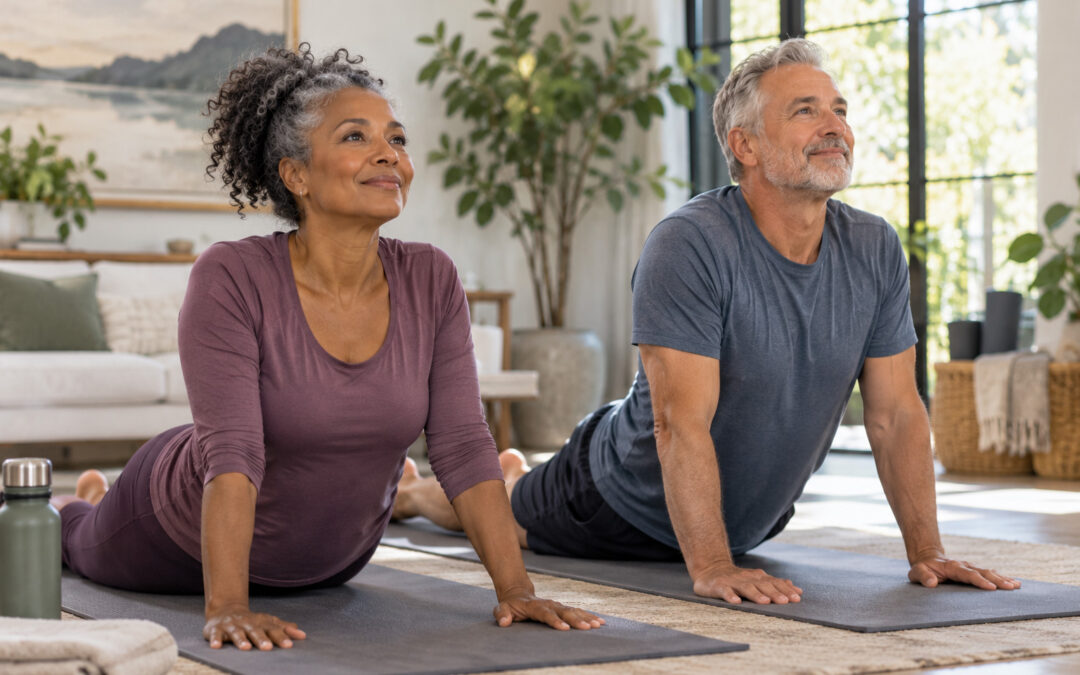
Yoga. Beyond flexibility, yoga builds strength, improves balance, and can be a powerful tool for stress management. Many styles exist, from slow, restorative practices to more active flows, so there’s likely a version that fits your comfort level.
Pilates. Pilates focuses on core strength, posture, and controlled movement. It’s especially good for building the kind of stability that protects your back and improves balance in everyday activities.
Bodyweight strength training. Exercises like wall push-ups, chair squats, seated leg lifts, and modified planks build muscle using your own body weight, without the impact of running or jumping. Building and maintaining muscle mass becomes especially important as we age, since it helps protect against falls and supports metabolic health.
Swimming and water aerobics. The buoyancy of water supports your body weight, making these excellent options if you’re managing joint pain or recovering from an injury, while still offering a great cardiovascular workout.
Cycling. Whether outdoors or on a stationary bike, cycling is gentle on the joints while building leg strength and cardiovascular endurance.
Stretching and mobility work. Often overlooked, regular stretching helps maintain range of motion, reduces stiffness, and can lower your risk of injury during other activities.
Building a Routine That Works for You
You don’t need to do all of these at once, and you don’t need a gym membership or expensive equipment to get started. Many of these activities can be done at home with little more than a mat and a chair. Start with what feels manageable, whether that’s a ten-minute walk or a short beginner’s yoga video, and build from there as it starts to feel like a natural part of your week.
Mixing a few of these activities together, some strength-focused, some balance-focused, some purely for movement and stress relief, can give you a well-rounded routine that supports your whole body over the long run.
As always, consult your healthcare provider before beginning any new exercise program to make sure it suits your needs and abilities. This is especially important if you have an existing health condition, a recent injury, or haven’t been active in a while. Your Horizon Family Medical Group provider can help you find a starting point that’s safe and effective, so you can build a routine that keeps you moving for years to come.