
The leaves have fallen, the mornings are dark, and that brisk walk around the neighborhood suddenly feels a lot less inviting. As the weather turns cold here in Orange County, NY, outdoor exercise isn’t always an option. Icy sidewalks, early sunsets, and freezing temperatures can put even the most dedicated routines on pause.
The gym is one answer, but memberships can be expensive, and when life gets busy, the drive to get there is often the first thing to go. If that sounds familiar, try resistance bands.
Why Resistance Bands?
Resistance bands are stretchy elastic loops or tubes that create tension as you pull, push, or press against them. That tension works your muscles much like free weights or gym machines do, without the bulk, the noise, or the price tag.
Here’s why we love them:
- They’re cost-effective. A full set of bands in several resistance levels often costs less than a single month at the gym.
- They save time. No commute, no waiting for equipment. You can fit in a workout while dinner is in the oven or during a commercial break.
- They work for every fitness level and age. Bands come in light, medium, and heavy resistance, so you can start gently and progress at your own pace. Many exercises can be done seated, making them a great option for older adults or anyone working on balance.
- They’re easier on the joints. Bands provide smooth, steady resistance throughout each movement, which many people find gentler than lifting heavy weights.
- They travel anywhere. Toss them in a suitcase, keep a set at the office, or store them under the couch.
Strength and Mobility in One
Strength training is about more than building muscle. It helps protect your bones, supports healthy blood sugar and metabolism, improves balance, and makes everyday tasks like carrying groceries, climbing stairs, and getting up from a chair easier. Federal physical activity guidelines recommend muscle-strengthening activity at least two days a week for adults.
Resistance bands also shine when it comes to mobility, your ability to move your joints freely and comfortably through their full range of motion. Because bands let you control the tension, they’re ideal for gently stretching tight muscles and strengthening the small stabilizing muscles around your shoulders, hips, and knees. Better mobility can mean less stiffness, better posture, and a lower risk of falls and injuries.
A Simple Routine to Get Started
Try these moves two or three times a week. Start with one set of 10 to 12 repetitions each, and add a second or third set as you get stronger. Move slowly, breathe steadily, and stop if anything hurts.
Beginner and seated-friendly
- Seated row: Sit tall with legs extended, loop the band around your feet, and pull the ends toward your waist, squeezing your shoulder blades together.
- Seated leg press: Sitting in a sturdy chair, loop the band around one foot and press your leg forward against the resistance. Switch sides.
- Bicep curl: Stand or sit on the band and curl the handles toward your shoulders, keeping your elbows close to your sides.
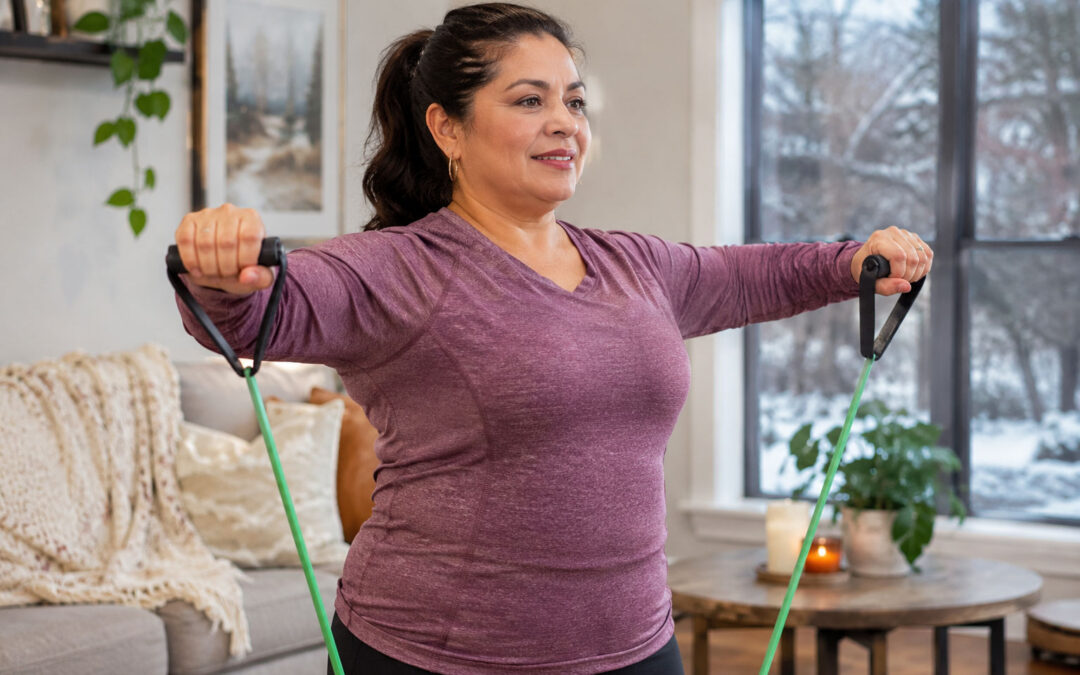
- Band pull-apart: Hold the band in front of you at chest height and gently stretch it apart, bringing your arms out to the sides. This is a great posture builder for anyone who spends time at a desk.
Ready for more
- Banded squat: Stand on the band with feet hip-width apart, hold the ends at your shoulders, and lower into a squat, as if sitting back into a chair.
- Glute bridge: Lying on your back with a loop band just above your knees, press through your heels to lift your hips, pushing gently outward against the band.
- Lateral band walk: With a loop band around your legs, take small steps side to side in a slight squat to strengthen the hips, which support balance and knee health.
- Overhead press: Stand on the band and press the handles from shoulder height straight overhead.
For mobility
- Hamstring stretch: Lie on your back, loop the band around one foot, and gently raise your straight leg until you feel a stretch. Hold for 20 to 30 seconds per side.
- Shoulder pass-through: Holding a light band wide with both hands, slowly raise it overhead and, if comfortable, behind you to open up the chest and shoulders.
Safety Tips
- Inspect your bands before each use and replace any with nicks, tears, or thinning spots.
- If you anchor a band to a door, use a door anchor and make sure the door is closed securely.
- Keep movements slow and controlled, especially as the band returns to its starting position.
- Warm up with a few minutes of marching in place or arm circles.
Check In With Us First
Every body is different. Before starting any new exercise routine, especially if you have a heart condition, diabetes, arthritis, high blood pressure, or a recent injury or surgery, talk with your healthcare provider. We can help you choose the right workouts for your medical needs and fitness goals, so you can stay safe while you get stronger.
To schedule a visit, use the Click to Schedule Appointment button on our website, log in to the patient portal, or call us at 1-800-859-0085. Here’s to a strong, healthy winter, right from your living room.
(This article is for general information only and is not a substitute for personalized medical advice.)