
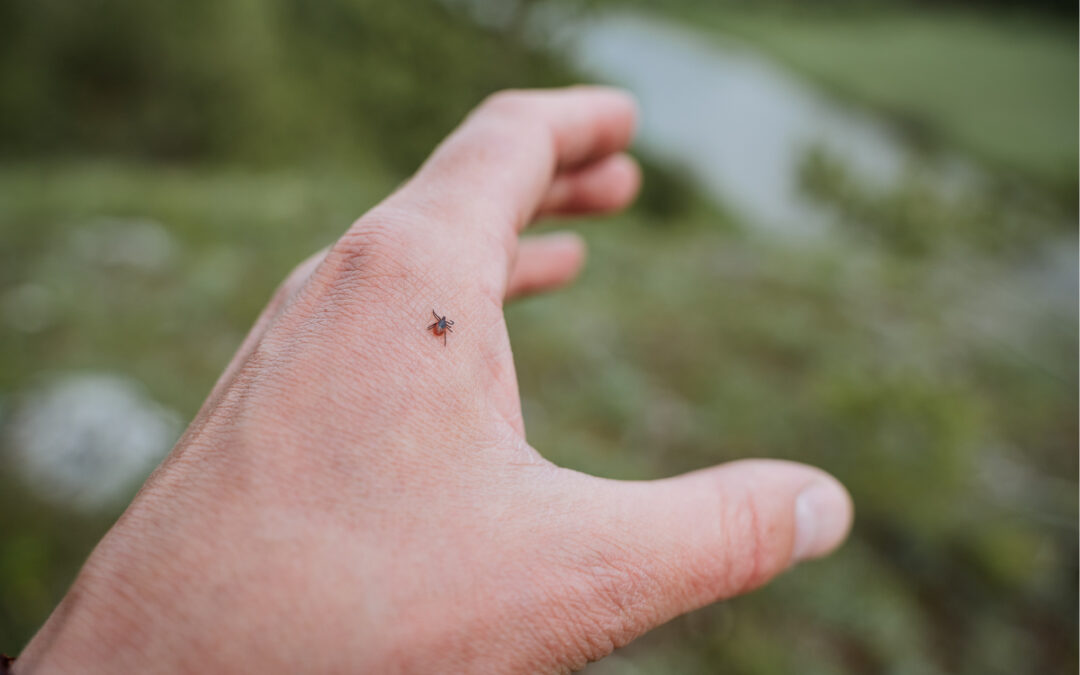
A walk through the woods, an afternoon in the garden, or a day playing outside can be great for your health. Unfortunately, sometimes those outdoor adventures come with a tiny, unwanted passenger.
Ticks are small, but some can transmit illnesses to people through their bites. Depending on where you live or travel, tick-borne illnesses can include Lyme disease, anaplasmosis, babesiosis, ehrlichiosis, and Rocky Mountain spotted fever, among others.
The good news is that a few simple precautions can greatly reduce your chances of being bitten. And if you do discover a tick, knowing how to remove it properly and what symptoms to watch for can help you respond appropriately.
Before You Head Outside
Ticks are commonly found in wooded and brushy areas, tall grass, leaf litter, and places where vegetation is dense. They can also be found in yards and gardens, particularly around wooded edges.
When you know you will be spending time in tick habitat, dress with prevention in mind. Wear long pants and long sleeves when practical. Light-colored clothing can make it easier to spot a crawling tick before it reaches your skin.
Tucking your pants into your socks may not win any fashion awards, but it can provide another barrier between ticks and your skin.
Using an EPA-registered insect repellent can also help. Products containing ingredients such as DEET or picaridin can provide protection when used according to label instructions. Clothing and outdoor gear can also be treated with products containing permethrin. Always follow the manufacturer’s directions, particularly when using repellents on children.
When hiking, stick to the center of trails when possible and avoid brushing against tall grass and vegetation.
Make Tick Checks a Habit
One of your best defenses happens after you come back inside.
Check yourself, your children, and your pets for ticks after spending time outdoors. Ticks can be extremely small, so take your time. Some may look more like a freckle or speck of dirt than the tick you are picturing in your head.
Pay particular attention to warm, protected areas, including:
- Around and behind the ears
- Along the hairline and scalp
- Under the arms
- Around the waist
- Inside the belly button
- Behind the knees
- Between the legs
- Around the groin
- Around the ankles
Showering soon after coming indoors can help wash away ticks that have not yet attached and gives you another opportunity to check your skin.
Do not forget your clothes. Ticks can hitch a ride indoors on clothing and attach later. Check clothing and gear carefully. Putting dry clothing in a dryer on high heat can help kill ticks that may be hiding in your clothes.
You Found a Tick. Now What?
First, do not panic. Finding an attached tick does not automatically mean that you will develop a tick-borne illness.
The most important step is to remove the tick promptly and correctly.
Use clean, fine-tipped tweezers to grasp the tick as close to the surface of your skin as possible. Pull upward using steady, even pressure. Avoid twisting or jerking the tick, which can cause parts of its mouth to break off and remain in the skin.
Once the tick has been removed, clean the bite area and your hands with soap and water, rubbing alcohol, or another appropriate antiseptic.
Avoid popular home remedies such as covering the tick with petroleum jelly, nail polish, or essential oils. Do not try to burn the tick off with a match or other hot object. The goal is to remove an attached tick as quickly and safely as possible, not wait for it to detach.
It can also be helpful to make a note of the date you discovered the tick. If you develop symptoms later, knowing when the bite occurred can be useful information for your healthcare provider.
What Should You Watch For?
A little redness or irritation immediately around a tick bite can occur and does not necessarily indicate an infection. However, pay attention to how you feel and how the area looks over the following days and weeks.
Symptoms of tick-borne illnesses vary, but possible warning signs can include fever, chills, headache, unusual fatigue, muscle or joint aches, swollen lymph nodes, nausea, or a new rash.
Lyme disease can sometimes cause an expanding circular or oval rash known as erythema migrans. It may develop a “bull’s-eye” appearance, but it does not always look that way. Some people with Lyme disease never notice a rash at all.
Other tick-borne illnesses can cause different types of rashes or no rash.
That is why it is important not to rely on one particular symptom when deciding whether something is wrong.
When Should You Call Your Healthcare Provider?
Contact your healthcare provider if you develop a rash, fever, flu-like symptoms, significant fatigue, joint or muscle pain, headache, or other concerning symptoms after a known or suspected tick bite.
You should also consider contacting your provider if you believe the tick was attached for an extended period, appears engorged, you are having difficulty removing it completely, or you are unsure what to do next.
In certain circumstances, a healthcare provider may recommend preventive treatment following a tick bite. Whether medication is appropriate depends on several factors, including the type of tick, where the exposure occurred, how long the tick may have been attached, and how recently it was removed.
Seek urgent medical attention for severe symptoms such as difficulty breathing, severe headache, confusion, fainting, weakness, or other rapidly worsening symptoms.
Enjoy the Outdoors, Just Be Tick-Aware
Ticks should not keep you and your family from enjoying the outdoors. A little prevention can go a long way.
Use repellent, dress appropriately, avoid dense vegetation when possible, and make tick checks part of your routine after outdoor activities. If you find a tick, remove it promptly and keep an eye out for symptoms afterward.
Most importantly, do not hesitate to ask for help when something does not seem right.
If you have concerns about a recent tick bite or develop symptoms afterward, contact your Horizon Family Medical Group healthcare provider. We can evaluate your symptoms, discuss your potential exposure, and help determine whether testing or treatment may be appropriate.