
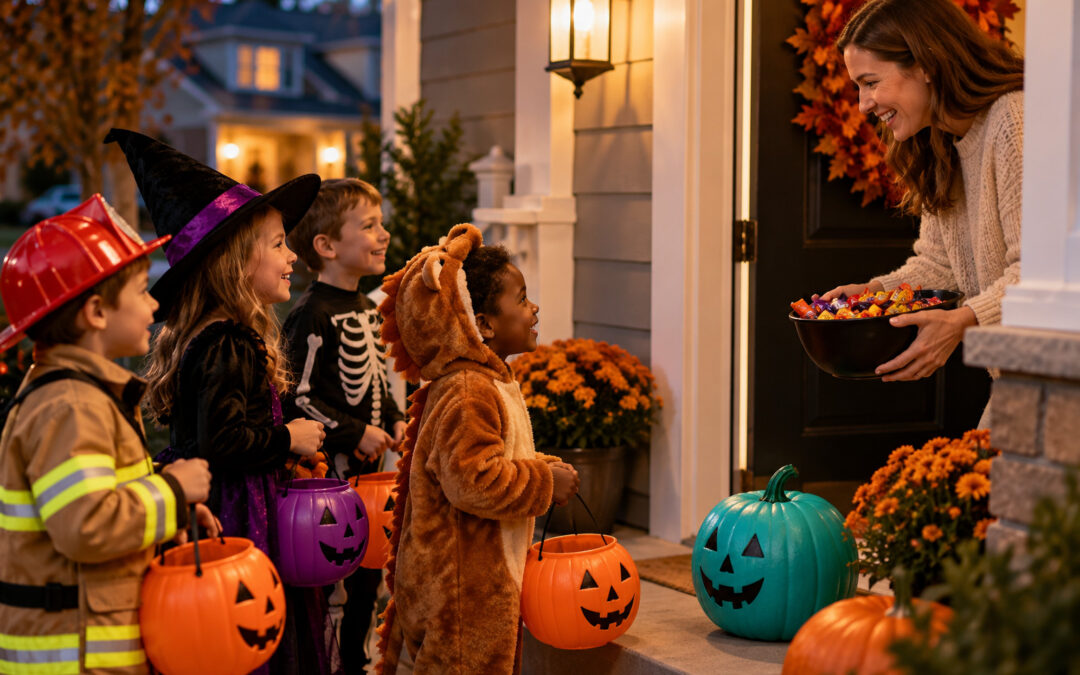
Costumes, jack-o’-lanterns, and bags full of treats make Halloween one of the most exciting nights of the year for kids. With a little planning, you can make sure it’s also one of the safest. From busy streets to hidden allergens to a mountain of candy, here’s how to help your little ghosts and goblins enjoy the night and wake up healthy on November 1.
Streets Are the Biggest Risk
Many parents worry about tampered candy, but the real danger on Halloween is traffic. A study published in JAMA Pediatrics found that pedestrian deaths rise 43% on Halloween evening compared with other fall nights, and children ages 4 to 8 are about 10 times more likely to be killed by a vehicle. Dark costumes, excited kids darting between parked cars, and distracted drivers are a dangerous mix.
Keep your trick-or-treaters safe on the move:
- Go with them. Children younger than 12 should trick-or-treat with an adult. Older kids should travel in groups, stick to a planned route, and have a set time to be home.
- Use sidewalks and crosswalks. Cross only at corners, look both ways, and never cross between parked cars. If there’s no sidewalk, walk facing traffic, as far from the road as possible.
- Be seen. Add reflective tape to costumes and treat bags, and give each child a flashlight or glow stick.
- Put the phone away. Remind older kids to keep their eyes up and their headphones off when crossing streets.
If you’re driving that evening, slow down in residential areas, turn your headlights on early, and watch carefully for children, especially between 5 and 9 p.m.
Choose Costumes With Safety in Mind
A great costume can also be a safe one:
- Choose bright colors and outfits labeled flame-resistant.
- Make sure costumes fit well and aren’t long enough to trip over. Have kids wear comfortable, sturdy shoes.
- Swap masks for nontoxic face paint, which won’t block vision. Test makeup on a small patch of skin first.
- Avoid decorative contact lenses unless prescribed by an eye doctor, since they can cause serious eye injuries.
- Keep props like swords and wands short, soft, and flexible.
Trick-or-Treat Ground Rules
Remind kids to visit only well-lit homes, never go inside a stranger’s house or car, and wait until they’re home to dig into their treats. Once you’re back, sort through the haul together. Throw away anything that’s unwrapped, torn, homemade by someone you don’t know, or looks tampered with. For toddlers and young children, remove choking hazards like hard candy, gum, small toys, and nuts.
Watch Out for Food Allergies
About 1 in 13 children has a food allergy, and many popular Halloween candies contain common allergens like peanuts, tree nuts, milk, eggs, soy, and wheat. For these kids, a single wrong treat can lead to a serious reaction.
If your child has a food allergy:
- Read every label. Fun-size candies can be made differently than their full-size versions, and some don’t list ingredients on the wrapper at all. When in doubt, leave it out.
- Carry their epinephrine auto-injector and make sure the adults with your child know how to use it.
- Plan a swap. Keep safe treats at home to trade for anything your child can’t eat.
- Look for teal pumpkins. Through the Teal Pumpkin Project, a teal pumpkin on a doorstep means the home offers non-food treats.
Want to help? Put a teal pumpkin outside your own door and offer stickers, glow sticks, pencils, or small toys. Every child on your block will feel included.
Keep the Sugar in Check
The American Heart Association recommends that children ages 2 to 18 have no more than about 25 grams, or 6 teaspoons, of added sugar per day, and children under 2 should have none at all. Just two or three fun-size candy bars can use up a full day’s limit, so a big Halloween haul can add up fast.
You don’t have to ban candy to keep things balanced:
- Serve a healthy dinner before heading out so kids aren’t trick-or-treating on an empty stomach.
- Let kids pick a few favorites to enjoy on Halloween night, then set a limit of one or two pieces a day afterward.
- Offer candy with meals rather than as all-day snacking, which is easier on teeth.
- Make sure everyone brushes before bed.
- Consider a candy “buy-back” or trade, swapping extra candy for a small toy, book, or special outing.
Have a Happy, Healthy Halloween
A few simple precautions can keep the focus on fun. If your child has a food allergy and needs an updated epinephrine prescription, or if you have questions about your family’s health this season, your Horizon Family Medical Group provider is here to help.
Call us at 1-800-859-0085, book online at horizonbooking.com, or message your care team through our patient portal. From all of us at Horizon, have a safe and happy Halloween!