Understanding Age-Related Macular Degeneration
Age-related macular degeneration, often referred to as AMD, is one of the most common causes of vision loss in adults over the age of 50. It affects the macula, the small central portion of the retina responsible for sharp, detailed vision. The macula allows you to read, drive, recognize faces, and see fine detail clearly. When it becomes damaged, central vision is affected, even though side vision may remain normal.
AMD does not cause complete blindness, but it can significantly impact independence and quality of life if it progresses without treatment. Understanding the early signs and knowing when to seek screening are essential steps in protecting your vision.
What Happens in AMD?
The retina lines the back of the eye and converts light into signals sent to the brain. The macula, located at the center of the retina, is responsible for focused central vision. In AMD, this area gradually deteriorates.
There are two main types of AMD: dry and wet.
Dry AMD is the more common form, accounting for the majority of cases. It develops gradually over time as the macula thins and small protein deposits called drusen build up beneath the retina. Vision changes tend to be slow and subtle at first.
Wet AMD is less common but more serious. It occurs when abnormal blood vessels grow beneath the retina and leak fluid or blood. This can cause rapid damage to the macula and sudden changes in vision. Wet AMD requires prompt treatment to prevent permanent vision loss.
Signs and Symptoms of AMD
In the earliest stages, AMD may cause no noticeable symptoms. This is why routine eye exams are so important. As the condition progresses, patients may begin to notice:
- Blurred or fuzzy central vision
- Straight lines appearing wavy or distorted
- Difficulty reading even with glasses
- Trouble recognizing faces
- Dark, empty, or shadowed areas in the center of vision
- Colors appearing less bright
One simple way to detect early distortion is by using an Amsler grid, a small square grid of straight lines. If the lines appear bent or missing, it may signal macular changes.
Any sudden vision distortion, especially rapid changes in central vision, should be evaluated immediately.
Who Is at Risk?
Age is the strongest risk factor. AMD is most common in individuals over 60, and the risk increases as you get older. However, other factors can also contribute.
Smoking significantly increases the risk of developing AMD and speeds its progression. High blood pressure, high cholesterol, obesity, and a family history of macular degeneration also increase risk. Long-term exposure to ultraviolet light may contribute as well.
Managing overall health plays a key role in protecting eye health.
How Is AMD Diagnosed?
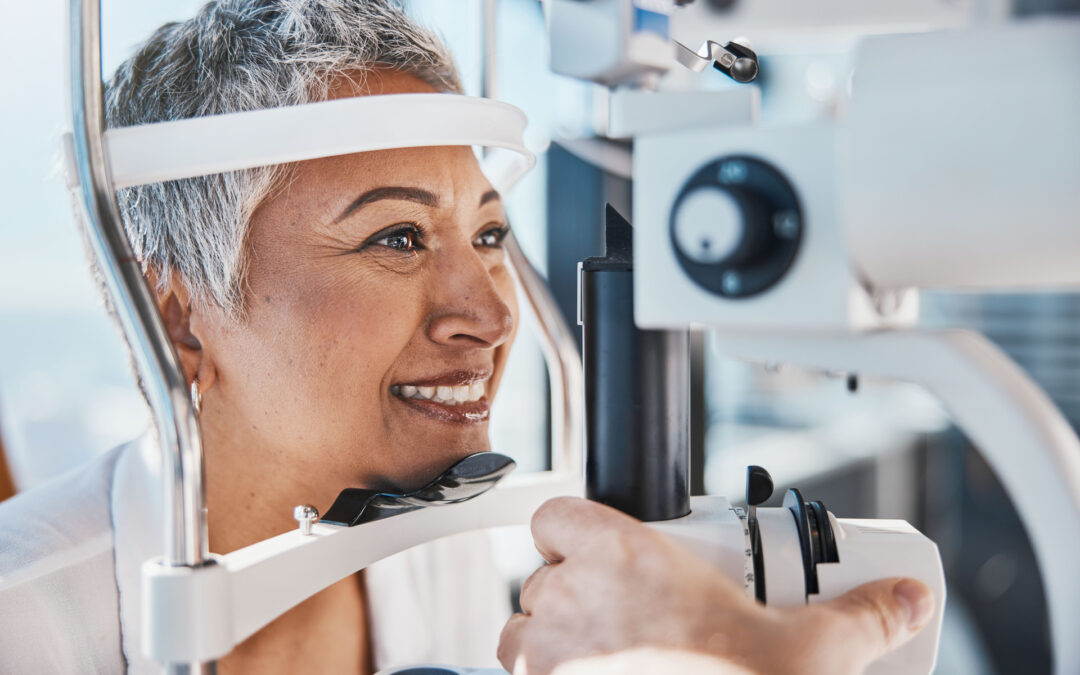
AMD is typically detected during a comprehensive dilated eye exam. During this exam, the eye care provider examines the retina for drusen, pigment changes, or abnormal blood vessels.
Additional imaging tests may be used, including optical coherence tomography, which provides detailed cross-sectional images of the retina. These tools help detect AMD early, even before symptoms develop.
Adults over 60 should have regular comprehensive eye exams, even if they believe their vision is normal.
Treatment Options for AMD
While there is currently no cure for AMD, treatments can slow progression and preserve vision.
For dry AMD, management focuses on slowing progression. Certain vitamin and mineral supplements, commonly referred to as the AREDS2 formulation, have been shown to reduce the risk of progression in patients with moderate to advanced dry AMD. These supplements typically include vitamins C and E, zinc, copper, lutein, and zeaxanthin.
Lifestyle changes are also critical. Stopping smoking is one of the most important steps. Controlling blood pressure and cholesterol, maintaining a healthy weight, eating leafy green vegetables, and consuming foods rich in omega-3 fatty acids all support retinal health.
For wet AMD, treatment is more urgent. The most common therapy involves anti-VEGF injections administered by an ophthalmologist. These medications help reduce abnormal blood vessel growth and leakage. When started early, they can stabilize vision and in some cases improve it. Treatment typically requires a series of injections over time.
Laser therapy may be appropriate in selected cases, although it is less commonly used today.
Protecting Your Vision
Preventive steps can make a meaningful difference. Avoid tobacco use, wear sunglasses that block UV light, maintain cardiovascular health, and eat a balanced diet rich in colorful fruits and vegetables.
If you notice distortion, dark spots, or difficulty seeing clearly in the center of your vision, do not delay care. Early detection and treatment are the most effective ways to preserve sight.
At Horizon Family Medical Group, we understand that vision is closely connected to independence and quality of life. We help patients manage chronic health conditions that affect eye health and coordinate referrals to ophthalmology specialists when needed. Routine screenings and proactive care are key components of healthy aging.
Your eyes change as you age, but vision loss from AMD does not have to be inevitable. With early detection, appropriate treatment, and healthy lifestyle choices, many people maintain functional vision for years. If you are over 60 or have risk factors for macular degeneration, schedule an eye evaluation and take an active role in protecting your sight.